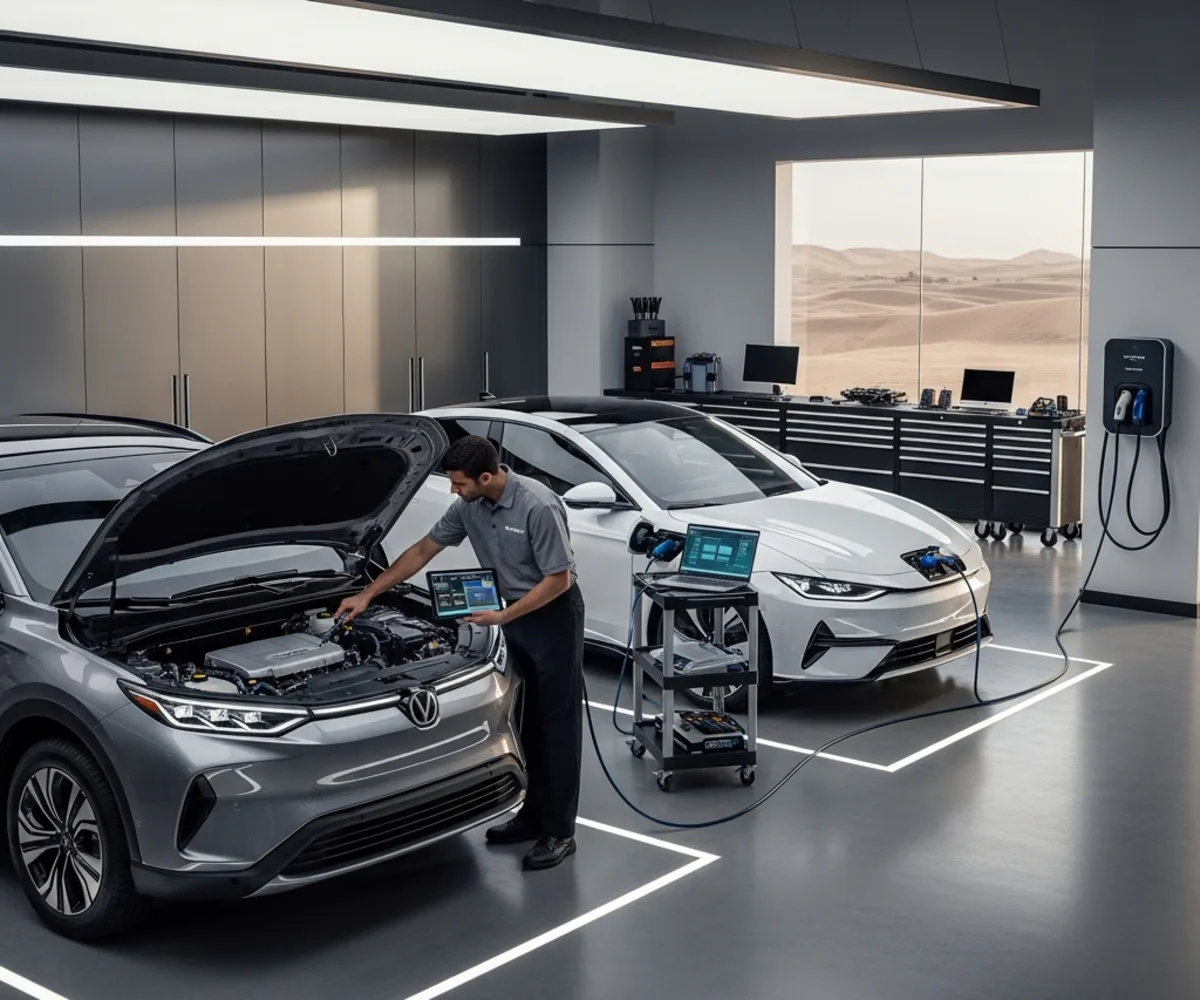
Electric cars are finally starting to feel normal. You see Teslas, BYDs, Mercedes EQs, BMW i models, Chinese EVs and more popping up everywhere, especially in places like Dubai and Abu Dhabi.
And almost every person thinking about an EV has the same worry in the back of their mind:
“What happens if the battery dies? Am I stuck with a massive bill?”
That’s where EV warranties come in. They are not perfect, but they are a lot stronger than most people think. The problem is, the details are scattered across brochures, fine print and brand websites.
So here’s a clear, human explanation of how electric vehicle warranties work, what they cover, what they don’t, and how you can use them without surprises.
On paper, EVs are simpler than petrol cars. No engine oil, no spark plugs, no exhaust, no gearbox with dozens of moving parts. In theory, fewer things can break.
But the parts that are unique to EVs are expensive:
The battery alone is usually the single most expensive component in the car, which is why manufacturers offer special warranties on it.
At the same time, the EV market is growing fast, including in the UAE, where the market is forecast to grow strongly over the next decade as infrastructure and incentives expand.
So it makes sense that buyers want a clear answer to one question:
“Will my battery and EV systems be protected long enough to make this worth it?”
Short answer: in most cases, yes. But you need to know the rules.
You can think of EV warranties as two separate layers:
This is similar to what you get with any modern car. It usually covers:
This is often 3 to 5 years, with a mileage cap depending on the brand and region. It protects you from defects in materials and workmanship in the general vehicle.
This is the big one for EV owners. Most manufacturers offer around:
Many also tie in key high‑voltage components like:
The idea is simple: if the battery or core EV systems fail prematurely, or lose too much capacity too quickly, the manufacturer pays to repair or replace them within that period.
Most EV battery warranties are built around two numbers:
Let’s say your EV had a 60 kWh battery when new.
A 70% capacity guarantee means the brand is promising that, during the warranty window, your usable capacity should not drop below about 42 kWh. If it does, and they confirm it with tests, the battery (or modules) should be repaired or replaced under warranty.
This capacity metric matters more than the exact range number, because range changes with speed, climate, tyres and driving style. Capacity is a cleaner measurement of battery health.
Interestingly, real‑world data shows that most EV batteries retain around 80% capacity even after 200,000 km, which means many never actually trigger the warranty limit.
So the battery warranty is partly there to calm buyers’ nerves and partly to protect against the rare bad pack or faulty modules.
Every brand writes it differently, but most EV battery warranties cover a few core areas.
If the battery pack has a fault from the factory that affects safety or performance, the manufacturer is responsible. This includes:
If the pack loses capacity faster than expected and drops below the guaranteed threshold (for example, 70% of original), the warranty should kick in.
The fix could be:
Many brands also include parts that are tightly linked to the battery, such as:
For example, some US and European brands explicitly list BMS and thermal system components in their battery warranty coverage, recognising they are part of the same ecosystem.
Exactly what’s included will depend on the brand and market, which is why it’s worth reading the actual coverage list for your specific car.
This is where many misunderstandings start.
Battery warranties are not a blanket guarantee that “nothing bad will ever happen to my battery.” They have limits.
Common exclusions include:
Every lithium‑ion battery slowly loses capacity over time. That is part of the chemistry. So if your battery goes from 100% to 85% capacity after several years, that’s usually considered normal and not a warranty case, as long as it stays above the guaranteed threshold.
Typical exclusions here are:
If the manufacturer can link the damage to misuse, they can deny coverage.
EV batteries hate extreme heat. In hot climates, consistent exposure to high temperatures without proper cooling can speed up degradation. Some warranty documents specifically exclude damage caused by prolonged exposure to extreme heat or ignoring warnings.
That does not mean you cannot own an EV in a hot place like the UAE. It means things like:
matter over the long term.
Things like:
are usually handled by insurance, not warranty. The battery warranty is about internal failures and abnormal wear, not external events.
If you look across major EV manufacturers, a few patterns stand out:
Most of them also allow the battery warranty to be transferred to the next owner, as long as the car has been serviced correctly and not abused. That matters a lot for used EV values.
The exact details change by market, so if you are in the UAE or GCC, always check the local warranty booklet or the regional website rather than assuming the same terms as Europe or the US.
A lot of fear around EVs comes from half‑true stories and outdated data. Here are a few myths worth clearing up.
Real‑world studies and fleet data show that most modern EV batteries retain around 80% of their capacity even after 200,000 km, which is better than many people expect.
The warranty is there if something unusual happens, but most packs never hit the failure threshold within the warranty window.
Not necessarily. A warranty is a minimum promise, not an expiry timer. Many packs keep working well beyond the 8‑year mark. It’s similar to engines in petrol cars: the warranty might be 3–5 years, but plenty of engines run fine for 15 years.
No. Some range loss is expected. You only really have a warranty case when:
Range loss from driving habits (high speeds, constant air‑con, heavy loads) is not a battery fault.
Once the factory warranty ends, some owners want continued protection, especially in places where parts and labour are costly.
That’s where extended warranties or EV‑focused service contracts come in. These can be offered by:
They often cover:
Battery coverage is more complex. Some extended warranties include limited battery protection, others focus on everything around the battery and leave the pack out, because it is so expensive. You have to read the coverage list carefully.
Providers usually require:
Before they accept the car into an extended EV plan.
For a brand like GE Warranty, which works across petrol, hybrid and electric cars, the idea is to take the same logic used for combustion engines (extended cover for major components) and apply it to EV systems: motor, electronics, cooling and, where possible, battery‑related risk.
The nice thing about EV care is that a few simple habits do most of the work.
You do not have to baby the battery, but:
Most cars have built‑in settings to limit charge to a certain level for daily use. Use them.
In hot climates like the UAE:
Your battery and electronics will thank you later.
Stick to:
Avoid random cheap solutions with no certification. If something goes wrong, a non‑approved charger is one of the easiest reasons for a warranty claim to be rejected.
EVs rely heavily on software to manage:
Updates often include battery‑related improvements. Skipping them is not worth it.
Even though EVs need less maintenance than petrol cars, you still have:
Keep receipts and digital records. If there is ever a dispute, that paper trail shows you did your part.
Here’s how this can help you in practice:
And if you are thinking about extended cover from a provider like GE Warranty, focus on:
The goal is not to avoid every risk completely. That is impossible. The goal is to avoid big, painful surprises.
EV warranties are not some mysterious new thing. They are just the warranty world catching up with the fact that cars now have batteries and power electronics instead of engines and gearboxes.
If you strip away the jargon, the logic is simple:
Understand those three pieces, and owning an EV feels a lot less risky - whether you are in the UAE or anywhere else.