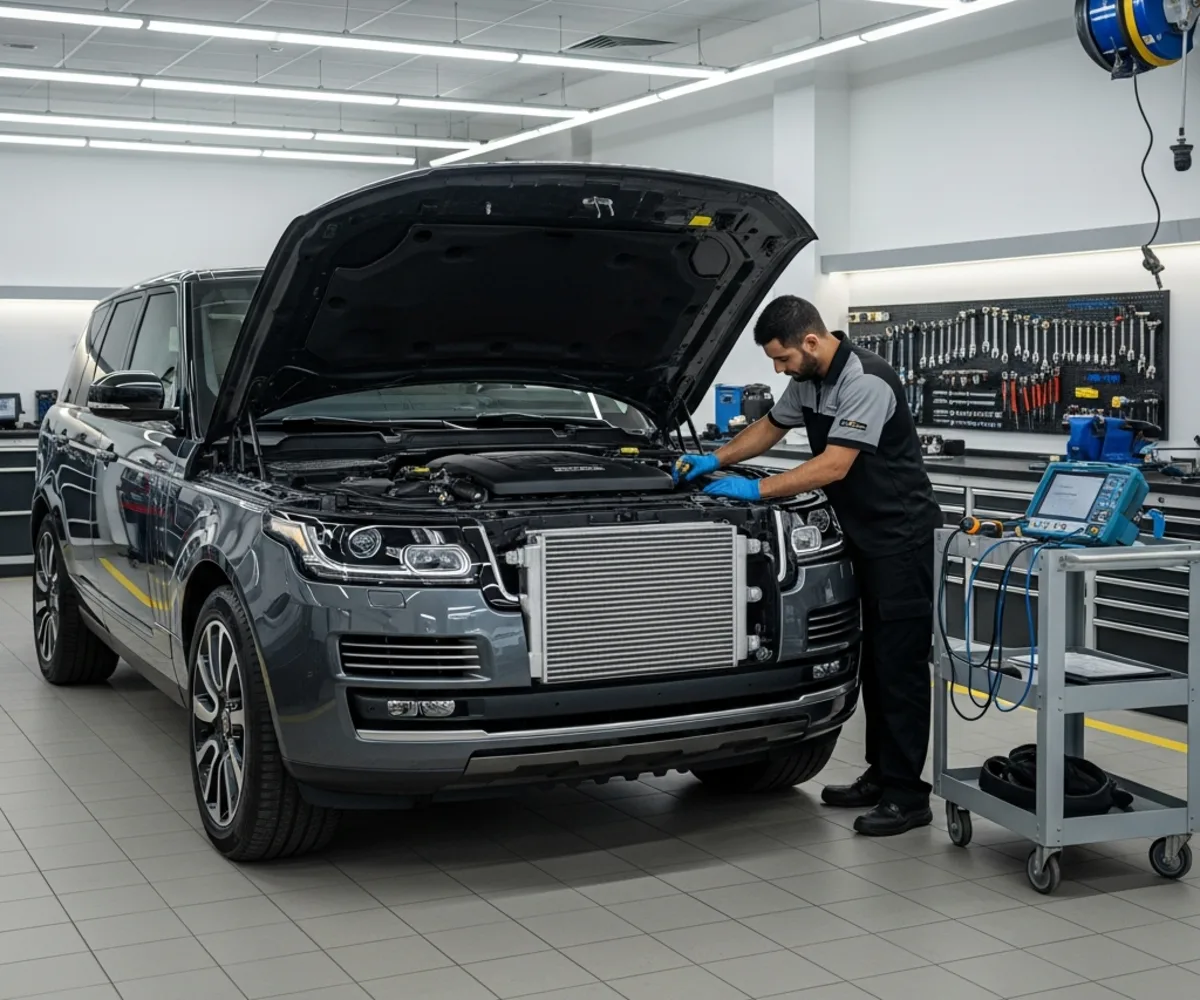
Range Rover owners do not usually worry about “electronics” until the day the car decides to throw a tantrum. A screen goes black. A camera stops working. A warning pops up, disappears, then returns at the worst possible time. Sometimes it feels random. Sometimes it feels personal. And in the UAE, where heat, humidity, heavy traffic, and the occasional surprise rainstorm are part of life, electronics issues can show up in ways that are confusing even for experienced drivers.
If you are reading this, you probably have one simple question behind all the noise: will the warranty cover it, and what decides the outcome?
This blog will walk you through how Range Rover electronics warranty coverage typically works in the UAE, what “electronics” really means in practical terms, and how claims are assessed from the point of view of diagnostics, evidence, and root cause. One important note before we start. Coverage always depends on your specific plan terms, any inspection baseline at the start of coverage, and the diagnostic findings at the time of the claim. So treat this as a clear guide to the process and the logic, not a replacement for your policy wording.
A mechanical failure often leaves a trail you can see. A leak. A broken part. A clear noise. Electronics faults are different.
Many Range Rover electronics problems are:
That mix makes electronics claims feel “grey.” The warranty provider is not only deciding whether a part is covered. They are deciding whether the failure has been proven, whether the cause is internal to the component, and whether exclusions like environmental damage or modifications apply.
So yes, it can be more complicated. But it is not a mystery. Once you understand how assessors think, you can massively improve the clarity of your claim.
Owners often use “electronics” as a catch-all. In warranty terms, it helps to break it into categories because different categories can be assessed differently.
This includes the central screen, audio, navigation, Bluetooth, CarPlay or Android Auto integration, amplifiers, and camera display functions.
Typical symptoms:
This covers sensors and systems like parking sensors, cameras, lane and blind spot functions, radar-related systems (if equipped), and collision alerts.
Typical symptoms:
This is where Range Rovers can get really annoying when something is off. Door modules, window controls, central locking, tailgate logic, seat controls, interior lighting, and keyless entry all sit here.
Typical symptoms:
If your Range Rover has electronically controlled suspension systems or air suspension, electronics are deeply involved. Height sensors, control modules, compressors, valve blocks, and communication between these elements can create both mechanical and electronic fault patterns.
Typical symptoms:
Battery management, alternator output, voltage stability, and related control can sit behind a surprisingly large number of “random” warnings.
Typical symptoms:
The reason this matters is simple. A warranty claim is stronger when the diagnosis identifies which category the fault is in, rather than treating it as vague “electrical issues.”
Even within the same brand, warranty plans vary widely. Some are generous on modules. Some are strict on any work that looks like calibration or programming. Some exclude water ingress or corrosion broadly. Some require evidence that the battery and charging system are healthy before approving a module replacement.
In practical terms, electronics coverage usually depends on these factors:
None of this is about pricing. It is about risk, evidence, and process.
Let’s walk through the typical assessment workflow. Even if your provider’s internal steps differ slightly, this is the general logic.
Most claims begin with an owner complaint such as “screen is black” or “camera not working.” The warranty provider cannot approve a symptom. They approve a repair tied to a confirmed failure.
So the first job is converting the symptom into a diagnosis.
This is where many claims either become smooth or become slow.
A proper electronics diagnosis usually includes:
A good workshop will also write a short diagnostic summary in plain language, which helps a lot. The assessor needs to understand what was tested and what was found.
This is the part that feels like “scrutiny,” but it is usually logical.
Assessors often ask questions like:
If the evidence answers these questions clearly, approvals move faster.
Once approved, the repair may still involve steps like programming, calibrations, or adaptations. Post-repair validation is often necessary in electronics because a part can be replaced correctly and still require calibration to restore full functionality.
This is why some claims include both “hardware” and “procedure” lines. If your plan excludes certain procedures, that is where you can see unexpected out-of-pocket items even if the component itself is approved.
A lot of delays come from one problem: the fault disappears during inspection.
It happens all the time. The owner sees an error message for two days. Then the workshop checks the car and everything looks fine.
In that situation, assessors tend to say, “Show me the proof.” Not out of stubbornness, but because approving a module replacement without evidence can lead to unnecessary repairs and disputes later.
If your fault is intermittent, the claim becomes much stronger when you can provide:
That last point is important. Codes stored in history often matter even when the fault is not active at that moment.
To keep this useful, here are the common issue patterns that frequently trigger warranty discussions. Not all of these will be covered under every plan. The point is to show the kinds of failures that get assessed and what evidence matters.
This can be software-related, hardware-related, or voltage-related.
What helps the claim:
Sometimes it is a camera. Sometimes it is the module. Sometimes it is wiring or moisture.
What helps the claim:
This can be key battery, vehicle battery, receiver issues, or communication faults.
What helps the claim:
This is often low voltage related, but not always. The tricky part is that low voltage can be both a symptom and a cause.
What helps the claim:
This can be an air leak, a compressor issue, a valve block issue, a sensor issue, or a control module issue.
What helps the claim:
Notice the pattern. Coverage decisions usually come down to proving the failure mechanism, not just naming the symptom.
You do not need to become a technician. You just need to document what the car is telling you.
Here is a practical “owner evidence pack” that helps a lot with electronics claims:
That last point matters because aftermarket wiring is a common source of disputes. Even if your aftermarket item is unrelated, the assessor will ask. Being upfront helps the diagnosis.
If you have influence over which workshop you use, choose one that provides clear paperwork. For electronics claims, the following documents often carry the most weight:
A claim can stall simply because the report is vague. “Electrical fault, replace module” is rarely enough. “Module X not communicating, confirmed by repeated scans, wiring checked, voltage supply verified” is a completely different story.
Many owners get surprised by two categories.
Replacing a sensor or camera often requires calibration. Replacing a module often requires programming or configuration. Some plans include these procedures, some limit them, and some exclude them unless explicitly tied to a covered repair.
If your plan is strict here, you can still have the hardware approved but be asked to cover certain procedure steps. That can feel irritating, but it is usually contract language, not a random decision.
In the UAE, electronics faults sometimes appear after heavy rain or after aggressive car washes. Moisture or corrosion findings often push a claim into a different category. Many warranty plans are strict about water ingress or corrosion because it is treated as an external influence.
If you suspect water exposure played a role, document the timeline. It helps set expectations and it helps the workshop diagnose properly.
Here is a practical flow that reduces problems.
Are Range Rover infotainment screens usually covered under warranty in the UAE?
They can be, depending on your plan and whether the fault is confirmed as a component failure. Approvals are faster when there are stored fault codes and a clear diagnostic report.
Do warning lights automatically mean the issue is covered?
No. Warning lights indicate a detected issue, not necessarily a covered failure. The decision depends on root cause and contract exclusions.
Why does the provider ask for battery and alternator test reports for electronics claims?
Because low voltage can trigger multiple systems to misbehave. If voltage supply is unstable, replacing modules may not solve the real problem.
What if the issue disappears when I take the car to the workshop?
Intermittent faults are common. Photos, videos, timestamps, and stored code history can still support the claim even if the fault is not active during inspection.
Do aftermarket accessories affect electronics warranty claims?
They can, especially if wiring is involved. If an accessory is connected to the electrical system, the assessor may request it be checked or disconnected during diagnosis to rule it out as a contributor.
Range Rover electronics warranty coverage in the UAE is rarely decided by guesswork. It is usually decided by diagnosis quality and root cause clarity. When the fault is proven, the evidence is clean, and the authorisation steps are followed, approvals are much smoother. When the fault is intermittent, undocumented, or tangled with low voltage, moisture, or aftermarket wiring, the process slows down.
If you want the simplest practical advice, it is this. Treat electronics warnings like evidence, not like annoyance. Capture what you see. Get a proper diagnostic report. Keep your records tidy. Those steps sound small, but they are exactly what turns a frustrating “maybe” into a clear, assessable warranty claim.