.webp)
A small amber light on the dashboard often looks like something that can wait until the weekend. The car still starts. It still moves. The air conditioning might even still feel cold. So the instinct is simple enough: keep driving, mention it at the next service, and hope it is nothing serious.
In the UAE, that approach can go wrong faster than many drivers expect.
Here’s the thing. A warning light is rarely the repair itself. It is usually the first visible sign that one system has started affecting another. In a place where cars deal with long commutes, stop-start traffic, summer heat, dust, and heavy air conditioning use, small faults do not always stay small for long. That is one reason minor warning lights can end up leading to major warranty repairs, especially when the original fault is caught late or misread early.
Most dashboard lights tell the driver that a system has detected something outside its normal range. That does not always mean the car is about to stop in the middle of Sheikh Zayed Road. It does mean the car has noticed a problem before the driver has felt one.
A simple way to think about it is this: the light is often the cheapest part of the whole story. The expensive part comes later if the cause keeps spreading. A tyre pressure warning can start with one underinflated tyre, but underinflation increases heat and wear. A battery warning can begin with charging weakness, but poor voltage can create odd faults across multiple electronic systems. A check engine light can be triggered by something as basic as a loose fuel cap, but it can also be tied to emissions, ignition, sensors, or misfiring that damages more costly components if ignored.
That is why technicians rarely treat a warning light as a one-part problem. They look at the chain behind it.
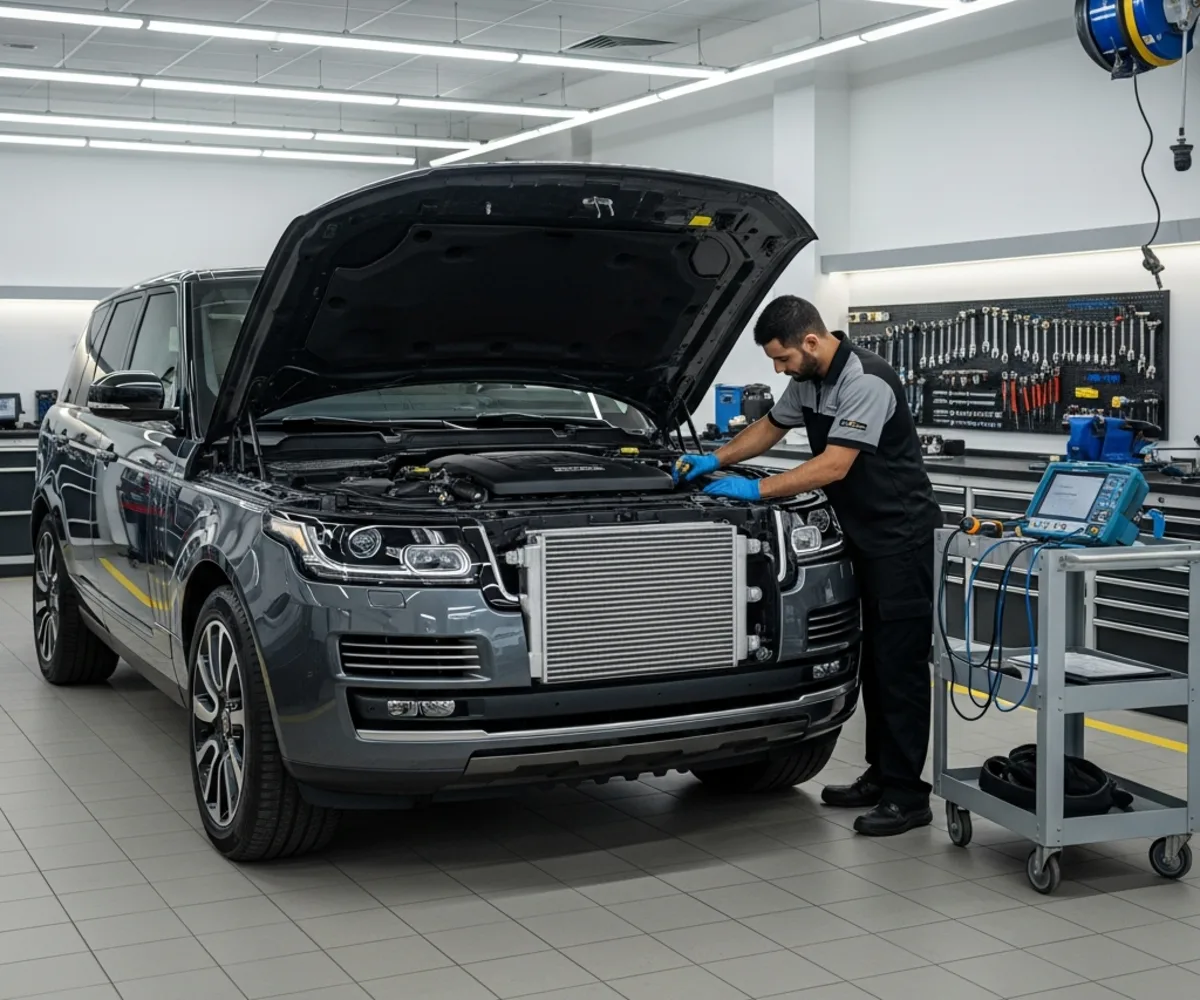
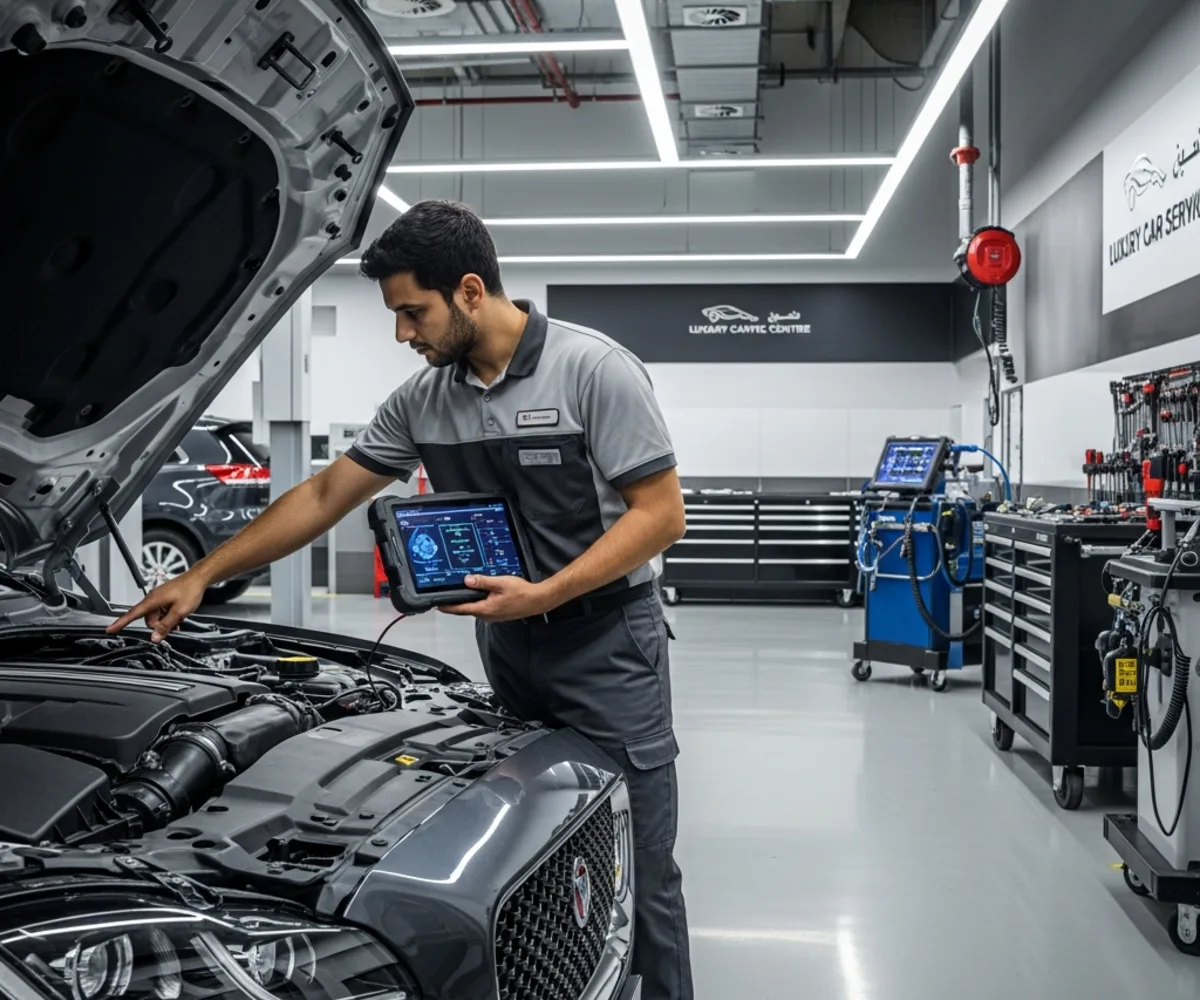
A lot of modern repairs begin with software, sensors, and control units before a broken mechanical part is obvious. That can actually help the driver, because the car gives an early alert. But it also means the workshop has to trace the root cause carefully.
Here’s how it works:
What this means is that a small light does not necessarily mean a small workshop bill. Sometimes it means the car has flagged a repair that is still claimable under warranty, but only if it is diagnosed properly and in time.
This is the part many owners do not hear clearly enough.
Warranty is not just about whether a part failed. It is also about what happened after the warning appeared. If a vehicle continues to be driven after a serious warning, the dealer may argue that secondary damage was avoidable. That does not automatically cancel every claim, but it can complicate the discussion.
In the UAE, consumer protection law is designed to strengthen quality and safety standards, provide correct information, and support fair and fast settlement of disputes. It also recognises the right to fair compensation for damage caused to consumers or their property by goods or services. That gives motorists some protection when faults are mishandled, misrepresented, or not resolved properly.
The catch is that legal rights do not erase practical evidence. Service history, fault-code records, job cards, inspection notes, and the timing of the complaint all matter. A driver who reports a warning promptly and follows workshop advice is usually in a stronger position than someone who drives for weeks with a temperature or charging light on and only books the car when it stops.
A few patterns come up again and again.
That only means the failure is still in an early stage or the control system is compensating for it. Many electronic and emissions faults start before the driver notices any obvious symptom.
In the UAE, heat is often part of the explanation, but it is not the diagnosis. Heat may expose a weak battery, a marginal cooling component, or an underinflated tyre. It is the stress multiplier, not the whole repair order.
Sometimes it can. Sometimes that choice turns a quick inspection into a bigger repair. A simple rule helps here: if the warning involves temperature, charging, braking, steering, or a flashing engine light, do not wait.
A calm, practical response makes a big difference.
Most warranty cases are settled without drama. Still, disputes happen, especially when there is a question about timing, maintenance history, or whether the failure counts as wear and tear.
A sensible path in the UAE is:
Hold onto service invoices, inspection reports, roadside assistance records, and messages from the dealer. If the issue began as a warning light and later became a larger repair, that timeline matters.
If a claim is rejected, ask why. Was it a lack of maintenance, outside influence, wear and tear, or a delayed response after a warning? Vague answers are not very useful.
The UAE Ministry of Economy and Tourism publishes automotive recall information. Separately, manufacturers often have VIN-based recall checks. A fault that looks like a private repair may sometimes sit within a broader campaign or known defect pattern.
The Ministry of Economy and Tourism’s consumer protection framework includes complaint routes and call-centre support, and the official UAE government platform points consumers to those channels. That does not guarantee the outcome a driver wants, but it does give a formal route when a repair dispute is not being handled fairly.
Minor warning lights feel minor because they usually appear before the car has fully failed. That is exactly why they matter.
In the UAE, the combination of heat, dust, traffic, and year-round vehicle use means small faults often move faster than drivers expect. A tyre pressure warning can become tyre damage. A battery light can turn into a charging-system job. A check engine light can start with something modest and end in a more serious repair if the root cause spreads.
That does not mean every warning light is a disaster. It means the smart move is to treat it as an early window, not an annoyance. Catch the problem while it is still one problem. That is often the difference between a short workshop visit and a major warranty repair.